Semi-Finished Apartment Handover Checklist (Egypt)
By AFAQ Development team · Updated
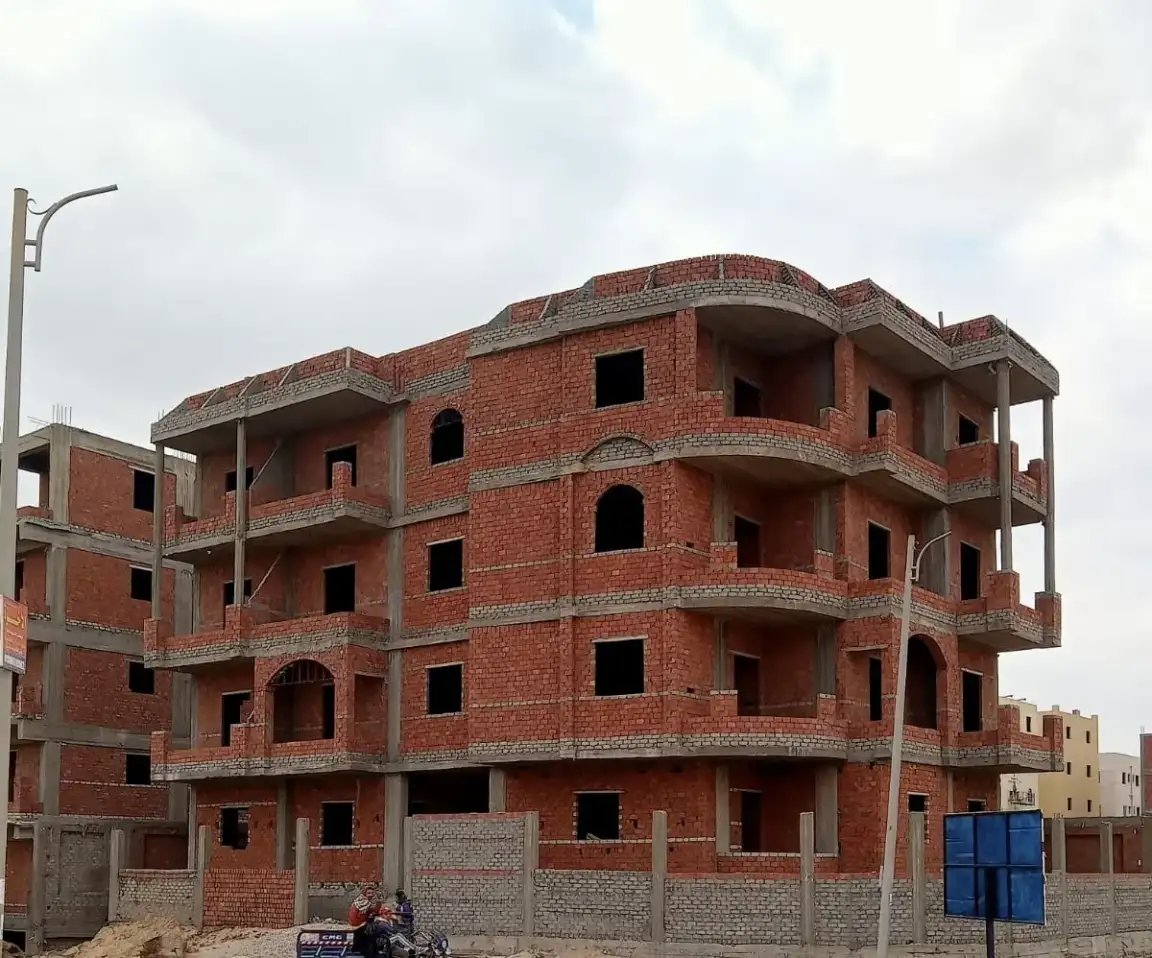
Receiving a semi-finished apartment means checking the unit against the specification annex in your contract before you sign the handover record: the area, the plaster, the electrical and plumbing rough-in, the windows and front door, and the walls and ceilings for damp and cracks. Any defect not written into the handover record on the day is much harder to prove later, and you may end up paying to fix it.
This checklist is built to take with you on handover day, whether you are there yourself or sending a relative or engineer on your behalf from abroad.
What should a semi-finished unit include?
Your contract’s specification annex decides, not the words “semi-finished”. Usually the unit has plaster, and sometimes electrical and plumbing rough-in, door frames, external windows and a front door. See what semi-finished means in Egypt. Print the annex before handover and tick each item; if there is no annex, ask the developer to write and sign one first.
What should you bring on handover day?
- The contract, specification annex and the architectural plan of the unit.
- A tape measure (ideally a laser measure).
- A long aluminium straightedge to check that plastered walls are flat.
- A spirit level or laser level.
- A strong torch for raking light on walls and ceilings.
- A bucket of water to test balcony and bathroom drains.
- A voltage tester screwdriver, if the power is connected. Do not touch any exposed wire.
- A charged phone to take date-stamped photos.
- A pen and a printed copy of this checklist.
If you can, bring a civil or finishing engineer. An hour of their time costs far less than a defect you discover after the finishes cover it.
How do you check the paperwork and area first?
Start with the papers: unit number and floor, area, specification and meters. Many Egyptian contracts quote a gross area that includes a share of stairs, lobbies and services, so the internal measurement will be smaller; check how your contract calculates area and compare room sizes with the plan. Also confirm whether electricity, water and gas meters are installed, and who pays for connection.
What should you check in each part of the apartment?
Work through it in this order: structure, plaster, floors, electrical, plumbing, windows and doors, balconies.
| Area | What to check | Warning sign |
|---|---|---|
| Ceilings | Raking torchlight | Damp stains, flaking, discolouration under the bathroom above |
| Beams and columns | Visible concrete | Cracks, exposed or rusty rebar, honeycombing. Call a structural engineer |
| Plaster flatness | Straightedge in several directions | Visible gaps under the straightedge |
| Plaster bond | Tap the wall | Hollow sound over a large area |
| Corners | Level or square | Out-of-square corners and window reveals |
| Floor slab | Level in several rooms | Clear level differences between rooms |
| Bathrooms and balconies | Height at the threshold, water test | No step down or no fall to the drain |
| Electrical | Count boxes against the plan, check cable size | Missing or broken boxes, thinner cable than specified |
| Drainage | Pour water into each outlet | Water standing, backing up, or outlets blocked with mortar |
| Windows | Open, close and lock each one | Stiff sashes, missing seals, signs of leaks |
| Front door | Open, close and lock | Rubbing, faulty lock, missing keys |
| Balcony | Pour a bucket of water | Water pooling or running towards the apartment |
| Railing | Shake it | Loose fixing or low height |
Hairline cracks in plaster are common, usually from shrinkage as the mortar dries, and are dealt with during painting. Any crack in a beam or column, a diagonal crack in a wall, or exposed steel needs an engineer before you sign.
How should you record defects in the handover record?
Every defect goes into the record with its location, a description, a photo and a written deadline for repair, before you sign.
- Photograph every defect with a date stamp and a visible reference point.
- Describe the location precisely (“crack in the north bedroom ceiling by the window”).
- Ask for a written repair deadline, before finishing work starts.
- Do not sign “received in good condition” or “no remarks” if there are defects; write “received with the attached remarks”.
- Keep a copy signed by both sides.
- For serious disputes (missing area, structural defects), talk to a lawyer before signing.
What should you do after handover, before finishing starts?
Do a second survey with the engineer or finishing company you will hire, so any outstanding defects go into the bill of quantities from the start. Then the work follows the usual finishing stages in order; you can prepare the items yourself with our free BOQ template, and ask every company to price the same items so you compare like with like.
If you finish with AFAQ Development, the first step is a survey of the unit’s condition, then an itemised BOQ with materials, and the price is set from that BOQ, because any defects found at handover change the items themselves. We work turnkey with materials or labour-only, with no minimum unit size. See apartment finishing, send us your apartment’s size and handover photos on WhatsApp, or get in touch.